

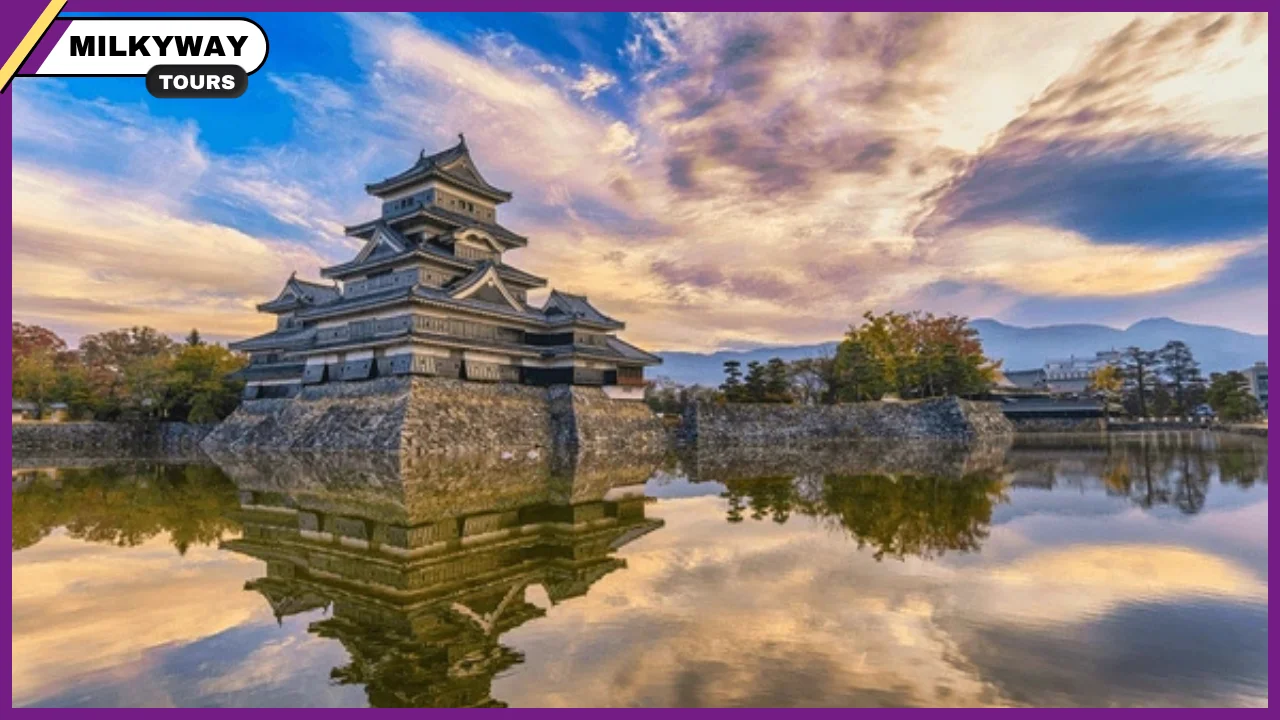
Matsumoto Castle, known as “Crow Castle” (Karasu-jo) for its striking black exterior, is one of Japan’s 12 original surviving castles and a UNESCO World Heritage tentative site. Built in 1592 by warlord Ishii Kazumasa, this six-story fortress in Nagano Prefecture symbolizes samurai power with its intricate wooden architecture and moat defenses.
In 2025, enhanced AR exhibits and eco-restoration projects breathe new life into this historic gem, making it a must-visit for history buffs, photographers, and culture seekers.
This guide explores Matsumoto Castle’s history, top attractions, and practical tips for an unforgettable visit. Check More Here: Kyoto and Nara – Explore Japan’s Ancient Cultural Capitals
The History of Matsumoto Castle
Constructed during Japan’s Sengoku (Warring States) period, Matsumoto Castle was designed as a stronghold against invaders. Its black-lacquered walls and stark silhouette inspired the “Crow Castle” nickname, contrasting with white-walled castles like Himeji. The castle played a role in the Meiji Restoration (1868), serving as a military base before becoming a cultural landmark in 1903. Today, it stands as a rare example of hirajiro (plains castle) architecture, with original wooden interiors preserved despite earthquakes and wars.
- Key Figures: Lord Toda Takayoshi expanded it in 1593–1594; it was owned by the Toda clan until 1871.
- 2025 Significance: Ongoing restoration uses sustainable materials, ensuring preservation for future generations.
Architectural Marvels and Highlights
Matsumoto Castle’s design is a masterpiece of defensive engineering and aesthetic elegance. The main keep (tenshu) rises six stories (three above ground, three below), with a gabled roof and swallowtail battlements. Climb the steep stairs to the sixth floor for panoramic views of the Northern Alps and cityscape.
Key Features
- Inui Keep: The smallest of three keeps, offering moat views and original beams.
- Tsukimi Yagura (Moon Viewing Turret): Used for celestial observations; now a photography hotspot.
- Ote-Niwa Garden: Restored in 2025 with native plants; free entry.
- Dungeon and Traps: Hidden floors with pitfalls for intruders—explore via guided tours (~¥300).
| Feature | Description | Access | Cost |
|---|---|---|---|
| Main Keep | 6-story tower with views | Stairs (steep) | Included in ¥700 ticket |
| Inui Keep | Defensive turret | Guided only | Extra ¥200 |
| Ote-Niwa Garden | Moat-side blooms | Open access | Free |
| Moon Viewing Turret | Aesthetic highlight | Exterior view | Free |
- Pro Tip: Visit the keep at sunset for golden light on the black eaves.

Best Time to Visit and Festivals
Spring (late March–early April) brings cherry blossoms framing the castle, while autumn (October–November) offers vibrant foliage. Summer hosts the Matsumoto Castle Summer Festival (July–August) with fireworks and taiko drums. In 2025, a new “Castle Lights” event (December) illuminates the grounds with LED lanterns.
- Avoid: Golden Week (late April–early May) for crowds.
- Pro Tip: Book tickets online (~¥700) to skip lines.
Practical Guide to Visiting
Getting to Matsumoto Castle
- From Tokyo: Shinkansen to Nagano (1.5 hours, ~¥8,000), then Shinano Limited Express to Matsumoto (1 hour, ~¥2,000). Total ~¥10,000, 2.5 hours.
- From Nagoya: Limited Express Shinano (~1.5 hours, ~¥3,500).
- Local: Matsumoto Station to castle (~15-minute walk or ¥210 bus).
| From | Route | Time | Cost |
|---|---|---|---|
| Tokyo | Shinkansen + Limited Express | 2.5 hrs | ¥10,000 |
| Nagoya | Limited Express | 1.5 hrs | ¥3,500 |
| Nagano | Limited Express | 1 hr | ¥2,000 |
Where to Stay
- Luxury: Buena Vista Matsumoto (~¥20,000/night) with castle views.
- Budget: Dormy Inn Matsumoto (~¥8,000/night) with onsen baths.
- Ryokan: Kurobe Kan (~¥15,000/night) for traditional experience.
Food Near the Castle
Matsumoto’s soba noodles (~¥800–¥1,200) and oyaki dumplings (~¥200–¥300) are must-tries. Savor Hida beef skewers (~¥1,000) at street stalls or kaiseki at nearby ryokan (~¥5,000).
- Pro Tip: Visit Nakamachi Street for soba shops.
| Dish | Spot | Cost |
|---|---|---|
| Soba Noodles | Midori Soba | ¥1,000 |
| Oyaki | Street stalls | ¥200 |
| Hida Beef | Local vendors | ¥1,000 |
Practical Tips
- Tickets: ¥700 (adult); free for under 15. Open 8:30 AM–5:00 PM (last entry 4:30 PM).
- Accessibility: Wheelchair ramps; elevators in main keep.
- 2025 Update: Eco-trail around moat with QR codes for history.
- Etiquette: No food in the keep; quiet reflection encouraged.

Nearby Attractions
Nakamachi Street
A 10-minute walk, this preserved street features white-walled warehouses turned cafes and shops.
- Highlight: Sake tastings (~¥500).
- Pro Tip: Buy washi paper souvenirs (~¥300).
Matsumoto City Museum of Art
Modern art in a sleek building (~¥410), with Yayoi Kusama exhibits.
- Pro Tip: Combine with castle for a half-day.
Conclusion
Matsumoto Castle in 2025 is a timeless icon of samurai strength and architectural genius. Its black silhouette against the Alps, preserved interiors, and 2025 eco-enhancements make it a highlight of any Japan trip. Climb the keep, wander the gardens, and let the “Crow Castle” inspire with its enduring legacy.
FAQs
What makes Matsumoto Castle unique?
It’s one of 12 original castles, with its striking black design and original wooden interiors.
How do I get to Matsumoto Castle from Tokyo?
Shinkansen to Nagano (1.5 hours), then Limited Express to Matsumoto (1 hour, ~¥10,000 total).
Best time to visit?
Spring for blossoms or autumn for foliage; early mornings avoid crowds.
Is the castle climb steep?
Yes, 30–40-degree stairs; wear comfortable shoes and take breaks.
What to eat nearby?
Shinshu soba noodles (~¥1,000) or Hida beef skewers (~¥1,000).


Kamikochi Private Tour In 2025 – Explore Japan’s Alpine Paradise
This guide details private tours, itineraries, and insider tips for an immersive private tour, ensuring a peaceful retreat amid Japan’s highest peaks. Check More Here: Matsumoto Castle – Discover Japan’s Iconic “Crow Castle”